How Outdoor Screens Block Mosquitoes, No-See-Ums, Flies, and Other Insects
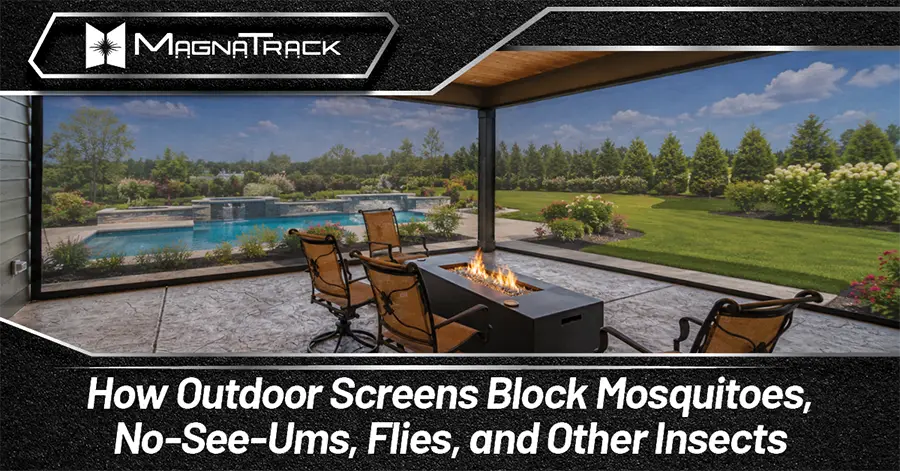
For most people, insects are a large reason a patio goes unused during the months it should be enjoyed the most. In warm, humid regions across the South, the Gulf Coast, and anywhere near water, the problem is not just seasonal. Insects can be present from spring through fall, and in some climates, year-round.
Outdoor insect screens address this directly, creating a barrier that keeps pests out without
closing off airflow, natural light, or your view of the space around you.
Why Insects Are Such a Persistent Problem Outdoors
Mosquitoes, no-see-ums, and flies can cause discomfort and cut outdoor time short, keeping guests inside during peak hours. Citronella candles and may sprays help, but they don’t solve the underlying problem.
The underlying problem is an open space with no barrier between you and the insects that share it. A properly installed insect screen changes that equation entirely.
How Insect Screens Work
Insect screens use tightly woven mesh fabrics to physically prevent insects from passing through while still allowing air to circulate and maintaining visibility to the outside. The key is the mesh size, measured by the number of openings per inch, which determines which insects the screen can effectively block.
MagnaTrack offers two insect screen mesh options, each designed for a different level of protection.
- • 16/14 Mesh is the standard insect screen fabric, designed to block mosquitoes and flies while maintaining good airflow and visibility. It’s available in two fabric options: Black at up to 144 inches wide and white at up to 120 inches wide.
- • 17/20 No-See-Um Mesh is the tighter weave option for finer insect protection. No-see-ums, sometimes called sand flies or biting midges, are small enough to pass through standard insect screen fabric, and the 17/20 mesh closes that gap. It’s available in black fabric at up to 144 inches wide.
Choosing between the two comes down to the insects you are most dealing with. In most regions, the 16/14 mesh handles the majority of the problem. In coastal areas, near marshes, or anywhere no-see-ums are a known issue, the 17/20 is the more effective solution.
Do Insect Screens Block Airflow?
One of the most common concerns about insect screens is whether they will make an outdoor space feel closed in. The short answer is no, not in the way people tend to imagine.
Both mesh options allow meaningful airflow through the screen, which is particularly important in warm climates where a breeze is part of what makes an outdoor space comfortable. Visibility through the screen is also maintained, so the feeling of being connected to the yard, the view, or the surrounding landscape is preserved.
The screen does its job at the boundary of the space without changing what it feels like to be inside it.
Remote Control and Smart Home Integration
MagnaTrack insect screens are motorized and remote controlled, available with either a Gaposa or Simu motor depending on the configuration. Both options allow you to raise and lower the screens with a remote, and the system can also be controlled from your phone, tablet, or integrated into your existing smart home setup.
That means deploying your screens at dusk, when mosquito activity peaks, doesn’t require getting up or doing anything more than tapping a button. It also means you can retract them in the morning without thinking about it, keeping the space open and connected to the outside during the hours when insects are less of a concern.
Where Insect Screens Make the Most Difference
Insect screens are relevant across the U.S., but they make the biggest difference in regions where pest pressure is highest. Hot-humid climates across the South, the Gulf Coast, Florida, and the mid-Atlantic see the longest and most intense mosquito seasons. Lakefront, riverside, and coastal properties in any region tend to see heavier insect activity than inland areas.
Any outdoor space that gets regular use during warm months is worth protecting. Temporary solutions help, but they don’t change how you use your space. An insect screen does, and once it’s in place, you can control it with the touch of a button.
Enjoy Your Patio Without the Bugs
The goal of an insect screen is to make your outdoor space somewhere you want to spend time, on your schedule, without insects deciding that for you. Whether it is a covered patio, a lanai, a pergola, or a screened-in porch, the right mesh and the right motor turn a space you tolerate into one you genuinely enjoy.
Fill out the form to connect with a local MagnaTrack dealer and find out which insect screen option is right for your space.